Showing posts with label #CanKidLit. Show all posts

Friday, July 14, 2023

NO HORSES IN THE HOUSE by Mirielle Messier & Anna Bron

 During my summer reading, I discovered this wonderful book which is too good not to share! I love stories about strong girls but this is a great book for anyone who wants to follow their own dreams.

Drawing of three horse heads looking at centre of page where girl is working at an easel, title above the easel
Why this book?

I found this story in my library's online collection when doing some research for one of my own writing projects. Was I intrigued! I’d never heard of this artist before but I was captured by her story. I loved learning about her life and the perseverance she showed in working towards her dream of becoming an artist. A great story for all ages!


My thoughts as a creator:

Even though I don’t write biography, it was interesting to see how Rosa’s life experiences were selected to create an attention-getting story. I love how the colour palette the artist chose makes me think of history and the past. The characters have such great facial expressions and there are lots of interesting details and movement in the illustrations that bring a playful feel to the story.


My thoughts as an educator:

What a great book for discussing the idea of breaking down barriers and considering different perspectives! This is a good story to read anytime in the classroom, with opportunities for discussion about following your own dreams, not giving up when you face something challenging, or times when girls weren’t allowed to do things. Also a nice book for showcasing a little art history.

Ages: 5 - 9

Grades: Gr 1 - 4

Connections: gender roles, animal painting, perseverance, artist biography

Activities:

Art Discussion:  Show several examples of Rosa Bonheur’s art work to students. Discuss questions such as: What do you notice about her artwork? What subjects did she like to paint or sculpt? How does the art work make you feel? Prompt: If you could ask the artist a question, what would you ask?

Art Activity:  Trying out texture, From Suzanne Tiedemann on Artsonia.com

https://www.artsonia.com/museum/gallery.asp?project=380844

Watch this video about visual texture:  https://vimeo.com/9284044  Talk about textures in the classroom.  Provide black paper and oil pastels for students to create their own textured lion face drawing.

Literacy/Persuasive Writing: This book could be a springboard for persuasive writing activities. For example, have students generate a list of things they aren’t allowed to do. Create a speech to persuade an adult with three reasons why they should be allowed to do it. Or, pretend you are Rosa Bonheur and design a poster to explain to others why you should be allowed to have a horse in the house.

Literacy/Alphabet: Create a class alphabet book! Encourage students to choose a letter of the alphabet and draw an animal to represent the letter. Or, make a list of the letters of the alphabet and encourage students to think of an animal to go with each letter.

STEM: Provide opportunities for students to research horses. Question/Prompt: If a horse can’t live in a house, where could it live? Design an ideal home for a horse using found materials such as straws, popsicle sticks, cardboard, and tape.


More resources:

  • Links for background information:

http://linesandcolors.com/2014/03/16/rosa-bonheur/

https://smarthistory.org/rosa-bonheur-plowing-in-the-nivernais-the-first-dressing/

https://www.theartstory.org/artist/bonheur-rosa/

https://www.artnews.com/list/art-news/news/who-is-rosa-bonheur-1234643325/ploughing-in-the-nivernais-1849/

  • Hands On Art Activity ideas:

https://craftwhack.com/19-animal-art-projects/

  • Other reviews (click title for link):

Canadian Review of Materials, reviewed by Julia Pitre


Description from the publisher:


Based on the incredible life of the pioneering, feminist and queer artist Rosa Bonheur, this charming story depicts Rosa's early years and her drive to fight for her dreams.

Rosa Bonheur loved to draw animals. She was good at it too! Unfortunately, in nineteenth-century France, girls were not allowed to be artists. But Rosa didn't let that stop her. In this fictionalized account of her early life in Paris, Rosa studies art at home, bringing a menagerie of animals into the apartment to study up close. When she is kicked out of the horse market for sneaking in wearing boys clothing, Rosa must think creatively to challenge the rules in pursuit of her dream of becoming a world-class realist painter and artist.

No Horses in the House! The Audacious Life of Artist Rosa Bonheur, written by Mirielle Messier and illustrated by Anna Bron, was published by Orca Books in 2023.


Visit the creators (click for link):

Mirielle Messier

Anna Bron

Orca Books


 For more wonderful picture books, visit Perfect Picture Book Friday!

Friday, October 28, 2022

3 in 3 (and tea!) Episode 3 - 3 books by Canadian creators

Welcome to another episode of 3 in 3 (and tea) with Debbie Ridpath Ohi and me, where we feature 3 children’s books by Canadian authors and/or illustrators and share a few tips and resources for using them in the classroom. 

In Episode 3, we explore a picture book and a middle grade novel with connections to family relationships, and a colourful bonus picture book! (If you want to catch up on other episodes, you can find them on Debbie's 3 in 3 playlist -- or click here: Episode 1 & Episode 2). After you watch the video, click on the titles or book covers below to find out more about the books and a few teaching ideas. 


Picture Book:


Grandmother and girl walking on beach towards water


Summary:
 In this dual-language picture book, a young child and their grandmother experience the seasons through nature. The poetic language and detailed illustrations make this a wonderful story to inspire children to write and draw.

Learn about the book creators:

Author: Brittany Luby 🍁

Illustrator: Joshua MangeshigPawis-Steckley 🍁

Translator:  Alvin Ted Corbiere.


Visit the publisher:

House of Anansi Press/Groundwood Books 


Activities & resources here.


Middle Grade:

Girl and her duck sitting outside in nature
 Like a Duck by Deborah Kerbel

 Summary: In the middle grade novel, Like a Duck, Sarah, a girl who has a registered therapy animal, Webster, to help her copie with stressful situations, is forced to go to a French-themed cooking camp where her duck isn't wanted. A quirky and fun story with lots of heart.


Visit the author online:

Deborah Kerbel 🍁  


Visit the publisher:

Scholastic Canada


Activities & resources here.


Bonus Picture Book:


Summary:
 
In Raindrops to Rainbow, a girl experiences different emotions on a day that starts out rainy. A fun rhyming story that features different colour words and shows the colours in a rainbow.


Visit the author and illustrator online:

John Miklos Jr.

Charlene Chua 🍁 


Visit the Publisher

Penguin Random House 


Activities & resources here.


**Find out more about Canadian author/illustrator Debbie Ohi by visiting her website.


**Thanks to The Faithful Sidekicks for writing and performing our theme song! You can learn more about them at their website

Raindrops to Rainbow by John Miklos Jr. & Charlene Chua


Painting of smiling girl with glasses holding an umbrella, walking under a rainbow with her dog

Why this book?

What a fun rhyming book about colours! I really loved the cute illustrations that showed a little girl and how she felt and the colours she enjoyed over a rainy day. Even though this story seems simple, there are lots of layers and ways to use this story in the classroom (another thing that attracted me to to this one).


My thoughts as a creator:

If you’re interested in writing rhyming stories, the text in this book is a great example of how to weave another concept, in this case colours, into a rhyming story. The way the illustrator kept the focus on the main character and showed her emotions was great for helping young children connect to the story.


My thoughts as an educator:

Not only does this story teach us about the colours in a rainbow and give kids a chance to practice colour words and names, but it also showed the different emotions a young girl experienced throughout the day. This book is a good length for preschool or kindergarten kids and the rhyming words and colours keep students engaged during a read aloud.

Ages: 4 - 7

Grades: K - 3

Connections: colours, rainbows, emotions, storms


Activities:

Active Learning/Math: Have students go on a colour hunt for items of different colours around the room. Build a giant rainbow together using the items!

Literacy: Encourage children to listen for the rhyming words in the story. Choose one of the words and see how many rhymes you can come up with!

Social-Emotional Learning: Draw emoji faces to show the different feelings the girl experienced in the story. Encourage students to try to think of a time when they felt scared or joyful (or one of the other feelings they discussed). Encourage students to draw their own picture about a time when they experienced one of the feelings.


More resources:

Rainbow Activities for Kids at Growing a Jeweled Rose

Rainbow Activities for Preschool at Preschool Inspirations


Description from the publisher

Raindrops are falling outside, but there’s still a world of color to experience! Delightful rhymes and brilliant illustrations detail how a gloomy, rainy day might not actually be so gloomy after all when you get to spend time with Mom, Brown Bear, and the colors around you. And when a “beaming rainbow, bold and bright” cuts through the sky, everyone gets to experience the joy of all the colors that can only come after the rain.

Raindrops to Rainbow, written by John Miklos Jr. and illustrated by Charlene Chua was published by Penguin Random House.


I feature this book in Episode 3 of #3in3 (and Tea) with Debbie Ridpath Ohi. For other picture books we've featured, check out Debbie's Youtube playlist here.


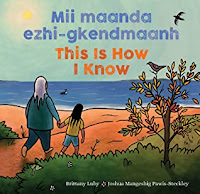
Mii maanda ezhi-gkendmaanh / This Is How I Know by Brittany Luby & Joshua Mangeshig Pawis-Steckley

Cover illustration showing child and grandmother walking outdoors over sand towards water

Why this book?

This wonderful book takes look at the seasons through feeling and experiencing them in nature. The more times I read it, the more I appreciate and think about different ways I know the seasons myself.


My thoughts as a creator:

I really enjoyed this look at the seasons from a perspective that is not my own. To stretch your writing brain, it would be interesting to try to make a list of the different ways you know the seasons (or a place) yourself and add those details to a manuscript or write a poem.


My thoughts as an educator:

child and grandmother in silhouette sitting in front of lake at sunset
I was so happy to share this book with my students! While we read this story, the children were eager to talk about their own experiences of how they experience the seasons. It’s wonderful to be able to share this dual-language story and keep it in the classroom for children to refer to at different times over the year. Talking about the illustrations with children provided so much opportunity for discussions about activities they experience with family members.

Ages: 4 - 7

Grades: K - 3

Connections: seasons, nature, Anishinaabe culture, intergenerational relationships

Activities:

Literacy & Nature: Talk about different ways of knowing the seasons. Go out on a nature walk and explore. What do you see, smell and hear related to the current season? When you return inside, draw a “map” to show what you found.

Dramatic play: Make a list of student ideas about different ways of knowing the seasons. Have students take turns acting out one of the ideas while others guess what they are showing (or which season they are showing).

Art: After reading the story and talking about the details in the illustrations, encourage children to paint their own pictures to show a favourite activity they do with a grandparent or other family member. What details could they include?

Inquiry: Talk about the animals and plants shown in the story. Choose one animal or plant and find out what it does during the different seasons of the year.


More resources:

The publisher has provided a study guide with comprehension questions and activities related to seasons and storytelling.


Description from the publisher:

In this lyrical story-poem, written in Anishinaabemowin and English, a child and grandmother explore their surroundings, taking pleasure in the familiar sights that each new season brings.

We accompany them through warm summer days full of wildflowers, bees and blueberries, then fall, when bears feast before hibernation and forest mushrooms are ripe for harvest. Winter mornings begin in darkness as deer, mice and other animals search for food, while spring brings green shoots poking through melting snow and the chirping of peepers.

Brittany Luby and Joshua Mangeshig Pawis-Steckley have created a book inspired by childhood memories of time spent with Knowledge Keepers, observing and living in relationship with the natural world in the place they call home — the northern reaches of Anishinaabewaking, around the Great Lakes.


Mii maanda ezhi-gkendmaanh / This Is How I Know was written by Brittany Luby and illustrated by Joshua Mangeshig Pawis-Steckly. It was translated by Alvin Ted Corbiere. This book was published by House of Anansi Press and Groundwood Books.


I feature this book in Episode 3 of #3in3 (and Tea) with Debbie Ridpath Ohi. For other picture books we've featured check out Debbie's Youtube playlist here.


You can also find wonderful picture book selections at Perfect Picture Book Friday, a blog review feature compiled by Susanna Leonard Hill, listing picture books with contributions by avid picture book readers and book bloggers.

Monday, October 24, 2022

LIKE A DUCK by Deborah Kerbel

Girl and duck sitting on a hill with lake and sun in the background

Why this book?

There were so many things to love about this book! Sarah, the main character lives with her mom and her duck, Webster, who is a registered therapy animal that helps Sarah when she feels stressed and anxious. Sarah has many worries, including how she’ll get through the unusual cooking camp her mom signed her up for as well as why her dad left when she was little.

I was really interested in the cooking camp—and a bit surprised to find it wasn’t quite what I expected. This book is about building relationships, coping with stressful situations and solving the mystery of what happens to Webster when he goes missing. 


Connections: family, friendship, anxiety, therapy animals, cooking


Activities for students:

Social Emotional Learning – Discuss different strategies for coping with stressful situations. Encourage students to write their ideas on cards to put in a basket in a “calming centre” where they can try each other’s ideas.

Literacy – A great activity could be for students to each make a list of 7 things people should know about their pet or about them. Posting them anonymously could make for a fun guessing game about who’s who.

Personal Journal – Reflect on times when you were forced to participate in something you didn’t want to do. What did you do? Is there something you could have done differently?

Reasoning Skills: List the pros and cons of having a duck for a pet.

Literacy & Problem-Solving: Brainstorm a list of ideas for what Webster might be doing while Sarah is searching for him. Provide materials for students to create a board game to show where Webster the duck might have gone.


More resources:

Discussion and Activity Guide from Scholastic


Description from the publisher:


For almost as long as she can remember, it’s been Sarah, her mom and her steadfast duck, Webster. Ten years ago, Sarah’s dad mysteriously left, and it feels more important than ever for her to find out why. But that is going to be harder than she expected.

When Sarah’s birthday plans get cancelled, she is sent to a camp where she doesn’t want to be. It couldn’t get any worse. And then it does. Will Sarah have to say another painful goodbye?

In a story about love, loss, unexpected friendship and finding out who you are, Like a Duck reminds us that family is what you make it . . . and sometimes what feels broken is actually imperfectly perfect.


Like a Duck by Deborah Kebel was published by Scholastic Canada.


You can also find more middle grade book selections at Marvelous Middle Grade Monday, a blog review feature compiled by Greg Pattridge, listing middle grade books with contributions by enthusiastic middle grade book readers and book bloggers.


Friday, September 9, 2022

MAGGIE’S TREASURE by Jon-Erik Lappano & Kellen Hatanaka - a book about treasure collecting and community

Girl pulling a wagon loaded with small treasures

Why this book?

My students are always finding all kinds of treasures, so I know they will love this book! I especially connected with the idea of noticing the small or unused things in the world and thinking about how they could be used or re-used. The illustrations are bold and colourful with a fun, distinctive style. 

My thoughts as a creator:

There are some lovely phrases in this story. One of my favourites is, “Maggie saw the sparkle in everything.” A nice book to study when thinking about using your observations of the world to add details to a story.

My thoughts as an educator:

The theme of helping the community is always great to promote activism and encourage students to create their own projects!  It would be interesting to discuss the main ideas in this story in comparison with the picture book Maybe Something Beautiful by F. Isabel Campoy and Theresa Howell with illustrations by Rafael Lopez.

Ages: 4 - 7

Grades: K - 3

Connections: re-using materials, collections, helping the community

Activities:

Active Play & Math – Go on a hunt outside (or inside) to find treasures. Encourage children to sort their “treasures” in different ways. Listen as they explain their reasoning for how they sorted them.

Building Community: What might happen if everyone in the class brought one toy or book they didn’t want any more? Could they be given to others or exchanged with each other?

Community Art Project: Encourage everyone in the class to bring in one “treasure” to glue onto a large board or canvas to create a class art project to display in the classroom.

Create – Give children a small collection of “treasures” such as paper scraps, wood scraps, buttons, pieces of cloth, and string or yarn and some glue and drawing materials. What can they make? A prompt question might be: Can you make something useful? Another creative project might be for everyone in the class to bring in one “treasure” to glue together into

Social-Emotional Learning – Brainstorm with children and help them make a list of things they can do to help someone else. Choose one project to work on together.

Classroom Tip: Keep a “scrap bin” of interesting paper bits that children can use for creating at a Maker’s Centre or when finished their work.


More resources:

Child Central Station has a fun Trash to Treasure art activity to try.


Description from the publisher:


Maggie finds treasure wherever she goes. Whether it’s a button, a feather or a shiny stone, she picks it up and takes it home. At first the neighbors and city workers are grateful to Maggie for cleaning up; the mayor even gives her an award. But over time Maggie’s collection grows bigger and bigger, until it spills out of her house and garden in an unsightly mess. Her parents tell her “Enough treasure!” and eventually even Maggie realizes that something must be done. Finally, inspired by a bird outside her window, she finds a way to share her treasure that enchants and transforms the entire neighborhood.

Maggie’s Treasure by Jon-Erik Lappano and Kellen Hatanaka was published by Groundwood Books in 2020.


For more wonderful picture books, visit Perfect Picture Book Friday at Susanna Leonard Hill's website