Showing posts with label Perfect Picture Book Friday. Show all posts

Friday, October 13, 2023

SCRIBBLE by Ruth Ohi -- a picture book about shapes, friendship and imagination

I'm happy to share this wonderful story about friends, imagination and making marks! I read this book every year in my kindergarten class, because it has so many possibilities to connect to learning. 


Loopy line dancing over a pink circle, blue square and yellow triangle

Why this book?

I love this gentle story about three friends whose play is changed by a newcomer. The expressions on the shapes have on the cover intrigued me! This book is a great one for inspiring art as well as discussions about friendship.


My thoughts as a creator:

This is another example of a picture book with many layers. It's so clever to use shapes (there's math) in this story about friends (social emotional learning) and imagination (art). What happens when the scribble comes along, anyway? 

My thoughts as an educator:

This is a wonderful story for talking about characters and how they have different personalities. How are the three shapes different? How are they the same? It's also another story we can read to encourage discussion about friendship and feelings. I especially like to use this one before art activities with shapes. My students enjoy using this story and their own creations as inspiration for creating their own stories. 

Ages: 3 - 6

Grades: Pre K - 1

Connections: 2-D shapes, friendship, imagination, identity 

Activities:

Social Emotional Learning/Drama:  Use simple puppets with shapes to act out friendship scenarios, such as making new friends, sharing toys or hurt feelings. Have children suggest ideas for social problem solving and act them out using the shape puppets.  

Literacy/Art: Provide students with shape cut outs and have them use lines and their imagination to create a shape-inspired art project. Another great art activity is to talk about how the faces on the shapes are created with simple lines and dots, and encourage children to choose a feeling to show on their own shape drawing.

Literacy/Writing: Prompt students to create a new story about one or more of these characters through drawing! Begin by drawing one of the shapes and showing how they are feeling. By asking "why" questions students can build their own story.


More resources:


Canadian author-illustrator Ruth Ohi tells us about the story and demonstrates how she starts drawing her characters:


Visit Ruth Ohi's website (click here) for activities based on the book and examples of student art work. 


Description from the publisher:


"Do you want to play?" said Scribble.

Circle loves to roll — around and around. Solid Square likes to sit still and strong. Triangle can celebrate all her good points, and always knows which direction to go. But when Scribble suddenly dashes through their ordered world — all messy lines and energy — Circle, Square and Triangle don’t know what to think.

But turns out just a zig zag here and a wavy line there are all that’s needed to stir imaginations, and soon the shapes find themselves working as a team, on a course for adventure!

Award-winning author and illustrator Ruth Ohi’s energetic art shows young readers that anything is possible with a splash of colour and the most basic shapes. This wonderful picture book will spark creativity, and encourage young minds to identify and draw the Circle-Square-Triangle-Scribbles in their worlds too!


Scribble was written and illustrated by Ruth Ohi and published by Scholastic Canada in 2016.


Visit the creators (click names for links):

Ruth Ohi

Scholastic Canada

 For more wonderful picture books, visit Perfect Picture Book Friday!

Friday, September 22, 2023

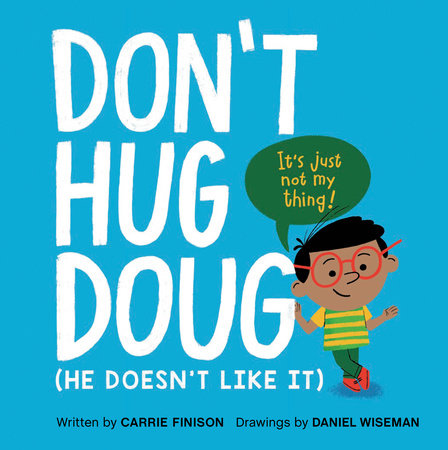
Don’t Hug Doug (He Doesn’t Like It), written by Carrie Finison and illustrated by Daniel Wiseman

I'm so excited to share this story with you! This is a great book to read at the beginning of the school year -- it's humorous and also gets across an important concept related to social emotional learning.


Why this book?

I'm always looking for entertaining stories to get across important concepts for early learners. I'd heard about this book before from my 12 x 12 writing group, and I was delighted to find it in my library. The simple cover design with the big title grabbed my attention right away.

My thoughts as a creator:

I love how Carrie Finison took a potentially serious topic and made it into a fun story! This is a wonderful example of how to include different layers in a picture book—including social emotional learning and rhyme! I also like the use of repetition which encouraged my students to read along. Illustrator Daniel Wiseman used a bright, cartoon style that is both attention-getting and suits the humorous tone of the story. 

My thoughts as an educator:

Early years educators and teachers will love this book for a lead-in to helping young children understand that they have a say in who can give them a hug. It’s also great for discussing individual differences and preferences. I also loved the spread with different ways to give a high five. Other elements to discuss include rhyming words, collections and different ways to show you care about someone. 

Ages: 4 - 7

Grades: K - 2

Connections: bodily autonomy, consent, individual differences, friendship

Activities:

Social Emotional Learning:  Make a list of different ways you could show you care about a friend. Revisit the page with different types of high fives. Turn to a partner and try five different ways to high five. Can you think of another way?

Math: Doug has a striped shirt. How many other children in the book are wearing stripes? How many are wearing dots? How many kids in your class are wearing stripes? How many are wearing dots? You can use these questions to model how to record data in charts or graphs.

Literacy/Phonics: Talk about the short "u" sound. Try this game from Fantastic and Fun learning to practice reading short "u" CVC (consonant-vowel-consonant) words.

Short U CVC game


More resources:


Visit author Carrie Finison's website for book related colouring pages and activities such as "Invent Your Own High Five."


Description from the publisher:


Doug doesn't like hugs. He thinks hugs are too squeezy, too squashy, too squooshy, too smooshy. He doesn't like hello hugs or goodbye hugs, game-winning home run hugs or dropped ice cream cone hugs, and he definitely doesn't like birthday hugs. He'd much rather give a high five--or a low five, a side five, a double five, or a spinny five. Yup, some people love hugs; other people don't. So how can you tell if someone likes hugs or not? There's only one way to find out: Ask! Because everybody gets to decide for themselves whether they want a hug or not.

Don’t Hug Doug (He Doesn’t Like It), written by Carrie Finison and illustrated by Daniel Wiseman, was published by G.P. Putnam’s Sons in 2021.


Visit the creators (click for link):

Carrie Finison

Daniel Wiseman

G.P. Putnam’s Sons, an imprint of Random House


 For more wonderful picture books, visit Perfect Picture Book Friday!

Friday, July 14, 2023

NO HORSES IN THE HOUSE by Mirielle Messier & Anna Bron

 During my summer reading, I discovered this wonderful book which is too good not to share! I love stories about strong girls but this is a great book for anyone who wants to follow their own dreams.

Drawing of three horse heads looking at centre of page where girl is working at an easel, title above the easel
Why this book?

I found this story in my library's online collection when doing some research for one of my own writing projects. Was I intrigued! I’d never heard of this artist before but I was captured by her story. I loved learning about her life and the perseverance she showed in working towards her dream of becoming an artist. A great story for all ages!


My thoughts as a creator:

Even though I don’t write biography, it was interesting to see how Rosa’s life experiences were selected to create an attention-getting story. I love how the colour palette the artist chose makes me think of history and the past. The characters have such great facial expressions and there are lots of interesting details and movement in the illustrations that bring a playful feel to the story.


My thoughts as an educator:

What a great book for discussing the idea of breaking down barriers and considering different perspectives! This is a good story to read anytime in the classroom, with opportunities for discussion about following your own dreams, not giving up when you face something challenging, or times when girls weren’t allowed to do things. Also a nice book for showcasing a little art history.

Ages: 5 - 9

Grades: Gr 1 - 4

Connections: gender roles, animal painting, perseverance, artist biography

Activities:

Art Discussion:  Show several examples of Rosa Bonheur’s art work to students. Discuss questions such as: What do you notice about her artwork? What subjects did she like to paint or sculpt? How does the art work make you feel? Prompt: If you could ask the artist a question, what would you ask?

Art Activity:  Trying out texture, From Suzanne Tiedemann on Artsonia.com

https://www.artsonia.com/museum/gallery.asp?project=380844

Watch this video about visual texture:  https://vimeo.com/9284044  Talk about textures in the classroom.  Provide black paper and oil pastels for students to create their own textured lion face drawing.

Literacy/Persuasive Writing: This book could be a springboard for persuasive writing activities. For example, have students generate a list of things they aren’t allowed to do. Create a speech to persuade an adult with three reasons why they should be allowed to do it. Or, pretend you are Rosa Bonheur and design a poster to explain to others why you should be allowed to have a horse in the house.

Literacy/Alphabet: Create a class alphabet book! Encourage students to choose a letter of the alphabet and draw an animal to represent the letter. Or, make a list of the letters of the alphabet and encourage students to think of an animal to go with each letter.

STEM: Provide opportunities for students to research horses. Question/Prompt: If a horse can’t live in a house, where could it live? Design an ideal home for a horse using found materials such as straws, popsicle sticks, cardboard, and tape.


More resources:

  • Links for background information:

http://linesandcolors.com/2014/03/16/rosa-bonheur/

https://smarthistory.org/rosa-bonheur-plowing-in-the-nivernais-the-first-dressing/

https://www.theartstory.org/artist/bonheur-rosa/

https://www.artnews.com/list/art-news/news/who-is-rosa-bonheur-1234643325/ploughing-in-the-nivernais-1849/

  • Hands On Art Activity ideas:

https://craftwhack.com/19-animal-art-projects/

  • Other reviews (click title for link):

Canadian Review of Materials, reviewed by Julia Pitre


Description from the publisher:


Based on the incredible life of the pioneering, feminist and queer artist Rosa Bonheur, this charming story depicts Rosa's early years and her drive to fight for her dreams.

Rosa Bonheur loved to draw animals. She was good at it too! Unfortunately, in nineteenth-century France, girls were not allowed to be artists. But Rosa didn't let that stop her. In this fictionalized account of her early life in Paris, Rosa studies art at home, bringing a menagerie of animals into the apartment to study up close. When she is kicked out of the horse market for sneaking in wearing boys clothing, Rosa must think creatively to challenge the rules in pursuit of her dream of becoming a world-class realist painter and artist.

No Horses in the House! The Audacious Life of Artist Rosa Bonheur, written by Mirielle Messier and illustrated by Anna Bron, was published by Orca Books in 2023.


Visit the creators (click for link):

Mirielle Messier

Anna Bron

Orca Books


 For more wonderful picture books, visit Perfect Picture Book Friday!
Friday, March 31, 2023

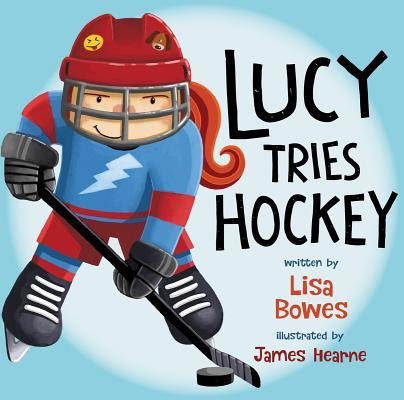
Lucy Tries Hockey by Lisa Bowes & James Hearne


Why this book?

I was excited to see this book at my local library. It’s a perfect way to introduce kids to hockey – as well as the idea of practicing to get better. The big, bold digital –style illustrations are full of action. I also appreciated the diversity in the kids depicted on Lucy’s team. This book is part of a series, where Lucy tries other sports—soccer, luge, short track, basketball and baseball. Some of them are also available in French and Spanish.

My thoughts as a creator:

It’s great to see a picture book that focus on a girl learning to play sports. I love the added layers in this story about not being afraid to try and practicing. This story is also told in rhyme, which adds another dimension to the story. I’m looking forward to reading the other books in the series.

My thoughts as an educator:

I love the idea of reading books that show case different sports. This series would be great to read during an Olympic year, as well as anytime to promote active living. The story contains a lot of hockey vocabulary that I discussed with my students.

Ages: 4 - 7

Grades: K - 3

Connections: hockey, rhyming, practicing sports 

Activities:

Active Play:  Check out this link from Hands On As We Grow for a fun way to play “indoor hockey” with tape and bean bag that could be adapted for playing on a table or area in the classroom.

Literacy: Draw a picture of your favourite sport or a sport you might like to try one day.

Literacy: Which sport do you think Lucy should try next? Write your own “Lucy Tries” story about your favourite sport!

STEM: Can you design a hockey stick? Provide materials for designing such as straws, popsicle sticks, cardboard, and tape. With a water bottle lid or other small object for a puck, students can test their hockey sticks on a table top to see which designs work best. Another challenge might be to try playing on different surfaces (e.g., carpet, table top, frozen slab of ice) to see what happens!


More resources:

Find out more about Lisa Bowes and her book Lucy Tries Basketball:

https://blog.orcabook.com/author-feature-lisa-bowes-2/

Read an article about Lisa Bowes and her series from Collingwood Today:

https://www.collingwoodtoday.ca/national-sports/bowes-hopes-to-encourage-kids-to-try-sports-through-lucy-tries-sports-series-1160434

More information about the series from Orca Books:

Created by veteran sports journalist Lisa Bowes, the Lucy Tries Sports series aims to promote inclusive physical literacy and encourage young readers to get involved in sports. Endorsed by elite athletes, the series focuses on participation and the importance of play.

The books follow Lucy and her friends as they learn introductory skills in a variety of exciting sports, guided by coaches and teachers. Lucy's eagerness to try new things will inspire all children to get outside and play.

The Lucy Tries Sports series reinforces the HIGH FIVE principles of healthy child development needed for quality programs, including the support of a caring adult, the opportunity to participate, to play, to make friends and to master skills.

Description from the publisher:

Lucy and her family are skating on an outdoor rink when she sees a game of hockey going on. It looks like fun, but maybe too challenging. Supported by her parents, Lucy enrolls in an introductory hockey clinic. And thanks to an encouraging instructor, she and her friends learn basic hockey skills, have fun on the ice and decide to add hockey to their list of favorite sports!

Lucy Tries Hockey is also available in French: Lucy joue au hockey

Lucy Tries Hockey by Lisa Bowes and illustrated by James Hearne was published by Orca Books in 2018.


For more wonderful picture books, visit Perfect Picture Book Friday at Susanna Leonard Hill's website


Friday, March 10, 2023

ANOTHER SQUIGGLY STORY by Andrew Larsen & Mike Lowery

Comic-style boy holding up pencil and notebook under the title
Why this book?

What a great book for inspiring kids to write! This one is extra fun because of comic-style design and the lists of ideas. I love how it models different aspects of the writing process—generating ideas, thinking, connecting ideas, writing and revising. I also enjoyed their first book, A Squiggly Story (see my blog feature here). 


My thoughts as a creator:

I love books that contain lists and hope to write one someday, so it was interesting to me to see how they incorporated the lists into the story. I also noticed there is a lot of dialogue in this story, which was included in speech bubbles. I loved the notebook pages in the illustrations! This book includes many different levels – the writing process, the relationship with a sibling, friendships, taking a break from a challenging task, and includes some gentle humor.


My thoughts as an educator:

It’s great to see a book that contains several different writing formats –speech bubbles, lists, and autobiography. This book is great for grade 1 and 2, where kids are learning to write using sentences, and especially for introducing a writing notebook. But I would definitely read this in kindergarten to show my students how to make lists of things they love. It was great how the story also shows how sometimes, when you’re stuck, taking a break can be helpful. This story also shows a little of the process of revision, and how to improve a story by adding details and changing sentences.

Ages: 4 - 7

Grades: K - 3

Connections: writing, lists, imagination, perseverance, siblings

Activities:

Literacy: Provide children with writing notebooks to write in when they are inspired. A writing corner with visual lists could be a fun way to inspire young writers. 

Literacy: Write or draw your own list of things you love. Can you create a story about yourself?

Social Emotional Learning: What do you do when you can’t think of an idea or feel stuck doing your school work? Brainstorm some ideas for short breaks you can take

Social Emotional Learning: Think of a time when a sibling or someone else in your family helped you. Draw a picture to show how you felt.

Art: Create a self-portrait! Provide a mirror and materials for kids, with tips such as making a large shape to almost fill the paper to begin.


More resources:

 Teaching Guide for A Squiggly Story from Kids Can Press

Self-Portrait Ideas from Fantastic and Fun  Learning

12 Strategies to Support Struggling Writers from TeachWriting.org


Description from the publisher:

The kindergartener who learned to use squiggles to write a story in award-winning Andrew Larsen’s A Squiggly Story is now in second grade and learning to write an autobiography. Told in the same authentic child’s voice, this playful book encourages readers to just start, even if they don’t know how their story will go. It offers an accessible early language arts lesson on the writing process, exploring important basics (brainstorming, first draft, revising) and key terms (autobiography, editing, title, cover). Mike Lowery’s bold illustrations incorporate story panels and dialogue bubbles, keeping the energy high and giving a fresh and modern feel to the pages. A strong tie-in with early literacy curricula, this book also works well for supplementary or at-home learning. It’s a perfect choice to inspire the storyteller in every child!

Another Squiggly Story, written by Andrew Larsen and illustrated by Mike Lowrey, was published by Kids Can Press in 2022.  Go here to visit Kids Can Press for more about this book.


Friday, February 17, 2023

A Library by Nikki Giovanni & Erin K. Robinson

black girl hugging an armful of books with beautiful colours in the background

Why this book?

I found this book at my local library before kindergarten class went on a visit there. This book gave a lovely introduction to how books can excite your imagination! I’ll definitely be looking for more of Nikki Giovanni’s work to read for myself. The illustrations in this book were full of texture—and could inspire kids to create interesting art of their own.

My thoughts as a creator:

This is a good example of a book with sparse text –sometimes just a few words on the page to spark thoughts or imagination.

My thoughts as an educator:

This book contains lots of interesting vocabulary (some words, such as “cautious” needed explaining to my kindergarten students). I liked the way this book showed going to the library as part of everyday life. Children could reflect on the ending line and think about how they feel or act differently in different places.

Ages: 4 - 7

Grades: K - 3

Connections: libraries, reading, imagination 

Activities:

Dramatic Play:  Provide bins of books, small book bags and paper to make pretend library cards or books and encourage children to “play library.” Add things to their experience as needed. For example, an old keyboard where they can “check in” books.

Literacy: Draw a picture of a library you have visited. Or design your own library—where would you keep all the books? Draw your favourite place to read.

Art: Look closely at the different textures in the art in this story. Make a painting of one of your favourite place. Add texture by painting with tools such as tooth brushes, mesh vegetable bags, pinecones, etc.  


Description from the publisher:

In this lyrical picture book, world-renowned poet, New York Times bestselling author, and Coretta Scott King Honor winner Nikki Giovanni and fine artist Erin Robinson craft an ode to the magic of a library as a place not only for knowledge but also for imagination, exploration, and escape.


In what other place can a child "sail their dreams" and "surf the rainbow" without ever leaving the room? This ode to libraries is a celebration for everyone who loves stories, from seasoned readers to those just learning to love words, and it will have kids and parents alike imagining where their library can take them.

This inspiring read-aloud includes stunning illustrations and a note from Nikki Giovanni about the importance of libraries in her own childhood.

Friday, December 2, 2022

The Bird Feeder by Andrew Larsen & Dorothy Leung

child and grandmother looking out a window at a cardinal on a bird feeder
 Why this book?

I don’t often read picture books that make me cry, but this one did. It reminded me so much of my own mom, the process of her dying and her love of birds. I loved the relationship between the child and their grandma, and the things they liked to do together. 

This would be wonderful book to help a child with grieving a loss of a special person in their life, because of the calm and steady way it showed what happened. It’s also the first time I’ve seen a hospice depicted in a picture book.


My thoughts as a creator:

The simplicity of the straightforward language and description created a sense of comfort when I read this story. There are many lines that give you space to stop and think and just feel the emotion. It’s a great example of a quiet and gentle book that can evoke emotions. I also loved the illustrations in this story. Though many of the scenes take place in the same room, different perspectives add interest, and carefully chosen details evoke emotions to fit with the text.


My thoughts as an educator:

I think this is a good book to provide for optional reading in a classroom or library. It needs a quiet space with some time for discussing the feelings and personal connections that might emerge when reading. I’d read this in a smaller group setting, so that children have a chance to talk about their own feelings and relationships with the special people in their lives.

Ages: 4 - 7

Grades: K - 3

Connections: grandparents,  birdwatching, dying, hospice care, therapy dogs  

Activities:

Literacy: Draw a picture of something special you like to do with a grandparent or other family member.

Literacy & Social-Emotional Learning:  Contact a hospice or retirement home to see if your students could make drawings or cards for residents. Have students create art or drawings or messages to brighten the walls in a retirement home or hospice.

STEM:  Create a bird-watching station in the classroom (e.g., make a sign for the window, provide binoculars and bird watching charts and books, as well as a book for students to record their own bird drawings). Provide materials to create bird nests or design a bird feeder.


More info:

Bird inquiry resources:

The Curious Kindergarten 

Kindergarten Fun in Room 101 

Mrs. Albanese's Class


Cornell’s Bird Academy (a forum for discussing citizen science investigations with ways introduce and assess student inquiry projects)


How to explain hospice care to children from Bridge Hospice Care


Description from Kids Can Press:  


When Grandma gets sick and comes to stay at her grandchild’s house, she brings her bird feeder. Grandma loves birds. And the child loves the time they now get to have together, drawing pictures of birds and “talking about interesting things.” After a while, though, Grandma’s health declines, and she moves to the hospice. Hanging Grandma’s bird feeder outside the window there makes things better. After a while, though, Grandma continues to grow weaker, and her ability to interact lessens. Difficult as it is, the child adjusts, knowing that, while the situation keeps changing, their love for each other never wavers.


Award-winning author Andrew Larsen beautifully captures the special bond between a child and a grandparent, and sensitively deals with a child’s loss of a loved one. Using the motif of their shared love of birds and its physical manifestation in the form of the bird feeder allows for a continuity in the child’s life that puts the loss in a larger context. Larsen offers an authentic, straightforward presentation of the process of a loved one’s death, from being sick, to going to the hospice, to participating less and less in their relationship, to death. It will lead young readers to ask their own questions about life, death and how we remember those who die. The cool palette and simple lines in Dorothy Leung’s art evoke empathy for the child’s experience, while the presence of the birds adds life and hope to the visual story.

The Bird Feeder was written by Andrew Larsen, illustrated by Dorothy Leung, and published by Kids Can Press.