Showing posts with label picture books about appreciating the world. Show all posts

Friday, October 28, 2022

Mii maanda ezhi-gkendmaanh / This Is How I Know by Brittany Luby & Joshua Mangeshig Pawis-Steckley

Cover illustration showing child and grandmother walking outdoors over sand towards water

Why this book?

This wonderful book takes look at the seasons through feeling and experiencing them in nature. The more times I read it, the more I appreciate and think about different ways I know the seasons myself.


My thoughts as a creator:

I really enjoyed this look at the seasons from a perspective that is not my own. To stretch your writing brain, it would be interesting to try to make a list of the different ways you know the seasons (or a place) yourself and add those details to a manuscript or write a poem.


My thoughts as an educator:

child and grandmother in silhouette sitting in front of lake at sunset
I was so happy to share this book with my students! While we read this story, the children were eager to talk about their own experiences of how they experience the seasons. It’s wonderful to be able to share this dual-language story and keep it in the classroom for children to refer to at different times over the year. Talking about the illustrations with children provided so much opportunity for discussions about activities they experience with family members.

Ages: 4 - 7

Grades: K - 3

Connections: seasons, nature, Anishinaabe culture, intergenerational relationships

Activities:

Literacy & Nature: Talk about different ways of knowing the seasons. Go out on a nature walk and explore. What do you see, smell and hear related to the current season? When you return inside, draw a “map” to show what you found.

Dramatic play: Make a list of student ideas about different ways of knowing the seasons. Have students take turns acting out one of the ideas while others guess what they are showing (or which season they are showing).

Art: After reading the story and talking about the details in the illustrations, encourage children to paint their own pictures to show a favourite activity they do with a grandparent or other family member. What details could they include?

Inquiry: Talk about the animals and plants shown in the story. Choose one animal or plant and find out what it does during the different seasons of the year.


More resources:

The publisher has provided a study guide with comprehension questions and activities related to seasons and storytelling.


Description from the publisher:

In this lyrical story-poem, written in Anishinaabemowin and English, a child and grandmother explore their surroundings, taking pleasure in the familiar sights that each new season brings.

We accompany them through warm summer days full of wildflowers, bees and blueberries, then fall, when bears feast before hibernation and forest mushrooms are ripe for harvest. Winter mornings begin in darkness as deer, mice and other animals search for food, while spring brings green shoots poking through melting snow and the chirping of peepers.

Brittany Luby and Joshua Mangeshig Pawis-Steckley have created a book inspired by childhood memories of time spent with Knowledge Keepers, observing and living in relationship with the natural world in the place they call home — the northern reaches of Anishinaabewaking, around the Great Lakes.


Mii maanda ezhi-gkendmaanh / This Is How I Know was written by Brittany Luby and illustrated by Joshua Mangeshig Pawis-Steckly. It was translated by Alvin Ted Corbiere. This book was published by House of Anansi Press and Groundwood Books.


I feature this book in Episode 3 of #3in3 (and Tea) with Debbie Ridpath Ohi. For other picture books we've featured check out Debbie's Youtube playlist here.


You can also find wonderful picture book selections at Perfect Picture Book Friday, a blog review feature compiled by Susanna Leonard Hill, listing picture books with contributions by avid picture book readers and book bloggers.

Thursday, March 31, 2022

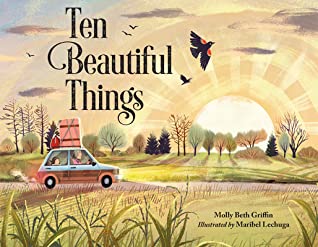
TEN BEAUTIFUL THINGS by Molly Beth Griffin & Maribel Lechuga - a book about feelings and appreciating the world


Why this book?

If my children were younger, this would definitely be a book I'd want to keep on our bookshelves to return to over and over again. As a person who is always looking for the small joys in life, I really connected with the idea of finding "ten beautiful things" in the world. This is a lovely story that shows us how looking for the positives and small joys in life can help with the anxiety and fear that comes with big changes -- or even with the ups and downs of everyday life.


My thoughts as a creator:

One of the things I enjoyed about this book was the way the author used all the senses for different perspectives on “beautiful things.” It was sweet the way Gram began choosing the things and then Lily joined in with her own ideas – which Gram accepted. The relationship between Gram and Lily showed love and care and respect. So much to love about this story!!

I also loved the sense of place all around them as they travelled, created by the lovely illustrations. I especially liked the way light and shadow added an additional level of realism to the computer-generated illustrations. It was wonderful to see that the body shapes of the characters were realistic and not idealized.


My thoughts as an educator:

I liked the thought-provoking distinction made between “pretty” and “beautiful.” This would be interesting to discuss with students, especially in light of the idea that beauty depends on the beholder.

It was wonderful to see that the body shapes of the characters were depicted realistically and not idealized. This book made me think about people in my own life I can rely on for support – another great subject for classroom discussion.


Ages: 5-9

Grades: Suitable for K - 5

Connections: life changes, feelings, positivity, small joys of life

Activities:

Writing: Have each student create their own list of ten beautiful things or create a class list of beautiful things. A class activity could be to create a calendar or classroom tree where each day, a different child records one “beautiful thing” they noticed that day.

Social-Emotional Learning: Discuss the difference between “pretty” and “beautiful”? What things make you feel beautiful inside? What things do you think are beautiful?  Have students draw a picture or make a mind map to show all the things that they think are beautiful.

Social-Emotional Learning Challenge: Have students think about and share  their responses with partner: How do you cope with difficult emotions or challenges? Use art materials of their choice to create their own “beautiful thing” that shows their feelings.

Outdoor Learning: Take students on a nature walk or a walk around the neighbourhood. Have them use their five senses to discover the world around them on the walk, for example, the smell of cut grass or the sound of boots crunching on snow. What beautiful things will did they find?


More resources:

Here’s an interview with author Molly Beth Griffin and book publisher Yolanda Scott.


Here's another take on this book by author Pat Zietlow Miller at Picture Book Builders: https://picturebookbuilders.com/2021/04/ten-beautiful-things-is-one-beautiful-book/


Summary from the publisher:

Lily and her grandmother search for ten beautiful things as they take a long car ride to Iowa and Lily's new home with Gran. At first, Lily sees nothing beautiful in the April slush and cloudy sky. Soon though, Lily can see beauty in unexpected places, from the smell of spring mud to a cloud shaped like a swan to a dilapidated barn. A furious rainstorm mirrors Lily's anxiety, but as it clears Lily discovers the tenth beautiful thing: Lily and Gran and their love for each other.

Ten Beautiful Things leaves the exact cause of Lily's move ambiguous, making it perfect for anyone helping a child navigate change, whether it be the loss of a parent, entering or leaving a foster home, or moving.

Ten Beautiful Things, written by Molly Beth Griffin and illustrated by Maribel Lechuga, was published by Charlesbridge in 2021.


Friday, March 18, 2022

A YEAR OF EVERYDAY WONDERS by Cheryl Klein & Qin Leng - a celebration of "firsts"


Why this book?

This book is all about first experiences. It starts with the first day of the New Year, and takes us on a journey of many of a child's "firsts" that might happen in a year. 

 I loved the fun, light-hearted illustrations created with ink and watercolor--they have so much movement and personality! I also appreciated the slight touches of humor in the text and the illustrations.

My thoughts as a creator:

This is a great example of a picture book that uses minimal words. The repetition of "first" creates a nice pattern and sets up some of the humor in the text. The text in this one also shows us how to leave lots of room for the illustrator to bring more to the story.

My thoughts as an educator:

I loved all the possibilities for using this book in the classroom. So many kids can relate to that feeling of the "first time" doing something and will think of many of their own "first experiences" during a class discussion. You could dive deeper into feelings and SEL by talking about feelings that are related to first experiences, such as fear, apprehension or even surprise. This book also works well as a lead-in to goal setting, since kids could draw or write about something they'd like to try for the first time.

Ages: 3 - 7

Grades: Prek - 3

Connections: new experiences, New Year's Day, seasons, feelings, appreciating the world, small joys of life

Activities:

Goal Setting & Literacy - Have students draw and write about something they'd like to try for the first time. 

Literacy - Make a list of writing topics based on "firsts." Have students draw or write about a "first" such as the first time they had waffles, the first time they went sledding, etc. 

Bonus tip: Create a class book of "firsts" by collecting a page from each student. I make inexpensive class books by putting each student's page in a plastic page protector and compiling them in a duotang. Then I get a few students to help design a cover, laminate it for greater durability and tape it onto the duotang. 

Math - Create a class graph to show how everyone is feeling. Or do a "Have You Ever...? graph question using one of the ideas from the story.

Social-Emotional Learning: Provide a "feeling check-in station" so students can move their marker to indicate how they are feeling. (In my classroom, I have  pictures of real faces showing emotions on a magnetic board and students can move their name magnet onto the appropriate picture at any time during the day). 

More resources:

In this interview on the Teaching Books Blog, author Cheryl Klein talks about where she got the idea for the book and provides an Imagination Activity for generating writing ideas. 

Proud to Be Primary Emotions for Kids: Lessons and Activities to Build Self-Awareness


Description from the publisher:

From first haircut to first ice-cream cone, each year brings a new cycle of experiences.

With each new year come countless little wonders. From the highs—first snowfall, first new umbrella, first beach trip—to the lows—first missed bus, first lost umbrella, first sunburn—every year older means another cycle of everyday experiences.

In their clever, playful, observant picture book, acclaimed author Cheryl B. Klein and illustrator Qin Leng explore many truths of childhood through a calendar year of small moments that, all together, comprise what it is to be a kid.

A Year of Everyday Wonders by Cheryl B. Klein & Qin Leng was published by Abrams Books for Young Readers in 2020.


Friday, February 21, 2020

A FOX FOUND A BOX by Ged Adamson – a story about music and nature


Don’t be fooled by the rhyming title—this isn’t a rhyming story, but instead a celebration of music and nature. For me, it also had a deeper message about the benefits of turning off noisy media and taking time to listen and appreciate the world outside.


Summary from the publisher:

A little fox is digging for food when–OUCH! What is that?–the fox finds a box! When the fox brings the box home to his animal friends–and turns a funny-looking knob–the box starts to sing, and music fills the forest. Everyone agrees that it feels nice. Day and night, they listen to the box’s songs, until, one day, it goes quiet. No matter what they try, they just can’t get the box to sing again. The animals stop swishing their tails and flapping their wings…. But, in the silence, the fox hears the drip-drop rhythm of melting icicles and the thump thump of a beaver’s tail and comes to realize music is everywhere. The noises of the forest and the animals build into a symphony, until, eventually, everyone joins together in a joyous dance party.

A Fox Found a Box was written and illustrated by Ged Adamson. It was published in 2019 by Schwartz & Wade Books.


Opening:    

Fox was searching.

Somewhere, under the snow, there was food.

And to find it, he had to dive in.


My Thoughts as a Writer:

This is truly a story where every word counts. This would be a great text to study to see how the author uses onomatopoeia in a quiet story.

I really enjoyed the gentle, playful illustrations. It was interesting to think about how a few lines could create such expression in the animals’ faces.


My Thoughts as an Educator:

This is a lovely story for introducing music activities as well as for discussing sounds and things we hear. It also would be interesting to talk about the “box” and think about why it doesn’t work. This story shows problem-solving, persistence and appreciation for nature. A great book for the classroom – it could be used in many different ways, even as a model for drawing and creating animals through art.

Ages: 3-7

Grades: PreK – 2

Themes: music, nature, appreciating the world

Activities:

Interactive Reading: Have children try to create some of the sounds as you read the story. What items would create a “swish-swish” or a “drip-drop beat”?

Explore & Listen: Go on a walk outside. What sounds do you hear in your neighborhood? Which are quiet? Which are louder?

Listen & Paint: Provide paints and play music while children are painting. Do different kinds of music lead to different colour choices?

Movement & Music: Play different kinds of music and have children make up their own movements. After each selection, give children a chance to share their feelings. How did the music make you feel?   

STEAM Challenge: Can you build something that makes noise? Decorate your construction! Find a friend and use your noise-makers to make your own music together.


Friday, June 28, 2019

MY FOREST IS GREEN by Darren Lebeuf & Ashley Barron – An artistic celebration of an urban forest

What a delightful book! This is a wonderful book for the classroom or anyone who likes to experiment with art. I borrowed a copy from the public library, but I really want to buy this for my classroom collection.

Summary from the publisher:

With art supplies in tow, a young boy explores the urban forest near his home, then interprets what he sees with his art. The boy is a keen observer who uses poetic, rhythmic language to describe the diversity he finds through all four seasons. His forest is both “fluffy” and “prickly,” “dense” and “sparse,” “crispy” and “soft.” It's also “scattered and soggy, and spotted and foggy.” His forest is made up of many colors --- but he decides that “mostly it's green.” Each aspect of the forest inspires the boy to create a different kind of art: charcoal rubbing, rock art, photography, sponge painting, snow sculpture, cut-paper collage. To this artist, there's always something new to discover, and to capture

My Forest is Green, written by Darren Lebeuf and illustrated by Ashley Barron was published in 2019 by Kids Can Press.


Opening:     

This is my forest.

Well, actually…

this is my forest.


My Thoughts as a Writer:

The text in this story is very simple and clear, creating a rhythm through the descriptive words that carries you to the end of the story. I especially liked the sense of possibility suggested by the ending!

The illustrations include many different ways children could represent a forest, using art materials as well as natural materials. I love the way the artist has used patterns and texture!


My Thoughts as an Educator:

This lovely book has a short text, which is perfect for reading aloud with young children. The illustrations are full of details to look at and explore! I loved the way the illustrations show different ways the young artist has captured the forest. This book could inspire kids (and teachers) with art adventures in so many ways.


Ages: 3-7


Grades: PreK – 2


Themes: forests, art, nature


Activities:

Draw & Write: Have each student create their own “forest” using their choice of art media and write a descriptive statement “My forest is __________.” Put up their work on a display to create an even larger forest!  

STEM: Go on a nature walk and collect sticks, logs, bark, etc. Can you build a forest? Create some animals to live in your forest.

Art: Bring paper and unpeeled crayons on a nature walk. Experiment with using crayons to make rubbings of different tree and rock surfaces.

Explore: Make a set of cards for the descriptive words in the story (tall, short, fluffy, prickly, etc). Can you find something in your classroom to match each word?

Thursday, January 17, 2019

THEY SAY BLUE by Jillian Tamaki - A picture book with an interesting perspective on colors

When I noticed this book was a finalist for a Cybils Award, I realized I'd better hurry up and read it! An interesting perspective on colours and nature.

 Summary from the publisher:

Caldecott and Printz Honor-winning illustrator Jillian Tamaki brings us a poetic exploration of colour and nature from a young child’s point of view. They Say Blue follows a young girl as she contemplates colours in the known and the unknown, in the immediate world and the world beyond what she can see. The sea looks blue, yet water cupped in her hands is as clear as glass. Is a blue whale blue? She doesn’t know — she hasn’t seen one.

Stunningly beautiful illustrations flow from one spread to the next, as time passes and the imagination takes hold. The world is full of colour, and mystery too, in this first picture book from a highly acclaimed artist.

They Say Blue was written and illustrated by Jillian Tamaki and published by Groundwood Books in 2018.


Opening:  

They say blue is the colour of the sky.


My Thoughts as a Writer:

This is such an interesting book from a writer’s perspective. Instead of following a traditional approach to telling a story, the writing is almost expressing a stream of different thoughts that connect to colours a child encounters. I like the hints of the narrator’s personality: “It’s just plain old yellow grass anyway.” And I was especially taken by thoughts connected to viewing and touching water.


My Thoughts as an Educator:

I’m curious about how children will react to this story and will have to read it to my students. I think it would pave the way for some interesting discussions about the senses and ways to describe experiences or colours. It would be interesting to use this book with children in grades 2 to 4 who are learning strategies for writing. I think it would be a good mentor text to encourage young writers to capture small moments or to include sensory details.

Ages: 4 - 9

Grades: K – 4

Themes: colors, senses, nature

Activities:

Paint: Choose a favourite page in the story. Create a piece of art using a similar style to the artist. Think of one word to describe your painting and add it as a title!

Think: Choose your favourite colour and think of ten different ways to describe it. If you have time, put your ideas together into a poem.

STEM challenge: Can you build a boat light enough for grass to hold it up? After you build your boat, take it outside to the grass and test it!

Thursday, December 14, 2017

Learning from Picture Books –NOW by Antoinette Portis

A deceptively simple book that reminds us about how young children experience the world.

Summary from the publisher:

Follow a little girl as she takes you on a tour through all of her favorite things, from the holes she digs to the hugs she gives.

Now was written and illustrated by Antoinette Portis, and published in 2017 by Roaring Brook Press.

Opening:

This is my favorite breeze.

This is my favorite leaf.

This is my favorite hole (this one)
because it’s the one I am digging.

My Thoughts as a Writer:

The text is a nice demonstration of how repetition of the structure can help to move the reader through the story. The text itself is short and feels very immediate, which goes well with the point of the story.  

My Thoughts as a Teacher:

While I think this is an excellent story for parents and young children to read together, it also would work in a preschool or kindergarten class for talking about “favorites.” It could spark an investigation into “favorite things.” I love how it reminds us of the young child’s perspective.

Ages: 2 - 6

Grades: Toddler  – Grade 1

Themes: appreciating the moment, family, favorite things

Activities:

Discuss: What is your favorite right now? Draw a picture or explain why.

Make a class book of pictures of “favorite things.”

Show students how to create a survey and have them collect data about their “favorite things.”

Have children take turns bringing a “favorite thing” to show and share for “Today’s Favorite.”

NOTE: This title has been nominated for the Cybils Award, and I am a first round panelist. There are many nominations and six other judges. My opinions should not be construed as a sign of inclusion or exclusion on the final short list.

Thursday, November 23, 2017

Learning from Picture Books – LIFE by Cynthia Rylant & Brendan Wenzel

A thought-provoking look at our planet with lovely, detailed illustrations.

Summary from the publisher:

There are so many wonderful things about life, both in good times and in times of struggle. Through the eyes of the world’s animals—including elephants, monkeys, whales, and more…

Life was written by Cynthia Rylant and illustrated by Brendan Wenzel. It was published in 2017 by Beach Lane Books, a division of Simon & Schuster.

Opening:

Life begins small.
Even for the elephants.
Then it grows.

My Thoughts as a Writer:

This is a quiet book with slight touches of humor. It’s an interesting example of a circular text that begins and ends the same way. The illustrations show the diversity of life on our planet with muted tones and lots of detail.

My Thoughts as a Teacher:

This is definitely a book for a quieter moment. For me, it generated lots of wonderings and thoughts about appreciating the smaller things in life, the diversity of life on our planet and what it needs to survive, and being hopeful when struggling with challenges. The text has many different interpretations and will work for several different age groups.

Ages: 4 - 12

Grades: PreK and up

Themes: diversity, appreciation of the earth, perseverance through challenges

Activities:

Choose your favourite animal. What would this animal love about life? Create a piece of art and write your message as a caption.

Take a picture of something small in nature. What could it grow into or become? Draw your idea. 

NOTE: This title has been nominated for the Cybils Award, and I am a first round panelist. There are many nominations and six other judges. My opinions should not be construed as a sign of inclusion or exclusion on the final short list.

Thursday, November 16, 2017

Learning from Picture Books – PICTURE THE SKY by Barbara Reid

Since my mom is an artist and has made many paintings of the sky and clouds, I could really relate to the concept behind this book. I loved the way this gave me a whole different way of looking at the sky – or many ways!

Summary from the publisher:

There is more than one way to picture the sky.

The sky tells many stories: in the clouds, in the stars, in the imagination. In lyrical text and brilliantly coloured illustrations, renowned artist Barbara Reid brings her unique vision to the sky above us and around us, in all its moods.

Picture the Sky was written and illustrated by Barbara Reid, and published in 2017 by Scholastic Canada.

Opening:

There is more than one way to picture the sky.
It can be a blanket, or the curtain rising on your day.

My Thoughts as a Writer:

I appreciate writing that draws attention to different perspectives or parts of the world that many people don’t take the time to think about. I enjoyed the careful choice of language and the cadence of the text. The illustrations are lovely, big enough and colourful to catch the attention of wiggly children, yet full of interesting details.

My Thoughts as a Teacher:

I want to read this book to my class in the hopes of sparking an inquiry or investigation of the sky! It’s a good story for encouraging students to share their perspectives or to read during quieter moments to encourage thoughtful reflection.

Ages: 4 - 7

Grades: K - 2

Themes: sky, modeling clay art, appreciation of the earth

Activities:

Go outside to observe and take pictures of the sky on different days (e.g., once a month) and discuss how it changes. Or write an emotion word to label the picture and create a class photo exhibit.


Have students create their own sky pictures using modeling clay or paint.

NOTE: This title has been nominated for the Cybils Award, and I am a first round panelist. There are many nominations and six other judges. My opinions should not be construed as a sign of inclusion or exclusion on the final short list.

Thursday, November 2, 2017

Learning from Picture Books – ANYWHERE FARM by Phyllis Root & G. Brian Karas

This book encourages wondering! A good choice to pair with non-fiction  about growing plants.
 
Summary from the publisher:

You might think a farm means fields, tractors, and a barnyard full of animals. But you can plant a farm anywhere you like! A box or a bucket, a boot or a pan — almost anything can be turned into a home for green, growing things. Windows, balconies, and front steps all make wonderful spots to start. Who knows what plants you may choose to grow and who will come to see your new garden?

 Phyllis Root delivers a modern rhyming mantra for anyone hoping to put their green thumbs to good use, while G. Brian Karas’s cheerful urban illustrations sprout from every page. After all, anywhere can be a farm — all it takes is one small seed and someone to plant it.
For any anywhere farm, here's all that you need: soil and sunshine, some water, a seed.

Anywhere Farm was written by Phyllis Root and illustrated by G. Brian Karas. It was published in 2017 by Candlewick.


Opening:

For an anywhere farm, here’s all that you need:
soil
and sunshine,
some water,
a seed.


My Thoughts as a Writer:

I liked the concept that seeds can be planted in all kinds of different places. The language in this book is fun: “Your seed will sprout out at its own seedy speed.” It’s a lovely example of rhyme done well.


My Thoughts as a Teacher:

A great choice to go along with learning about plant growth. Some pages introduce questions, which are good opportunities or models for students to wonder and think. This is a really fun rhyming story for young children! I liked the way the ending invites the reader to take action and plant their own seed.

Ages: 4 - 7

Grades: K - 2

Themes: seeds, growing plants, environment, community

Activities:

Can we create a classroom garden? What do we need? Encourage students bring in seeds and containers to plant their own creative garden.

Draw a picture of an unusual place where you could plant a seed.

Create a “wonder wall” where students can post their own questions about growing seeds.